
What is the history of the Wabash Stripe?
The Wabash stripe is a distinctive textile pattern characterized by alternating stripes of varying widths, often in a monochromatic or two-tone color scheme. Its history is tied to American workwear and railroad culture, particularly in the late 19th and early 20th centuries.
Origins & Railroad Connection
- The name “Wabash” likely comes from the Wabash Railroad, a major Midwestern railway line operating in the 1800s and early 1900s.
- The stripe pattern was commonly used on railroad overalls and work shirts, helping workers stand out against industrial backgrounds while maintaining a utilitarian aesthetic.
- Some theories suggest the stripes were inspired by prison uniforms or French ticking fabric, but its strongest association remains with railroad workwear.
Popularity in Workwear & Denim
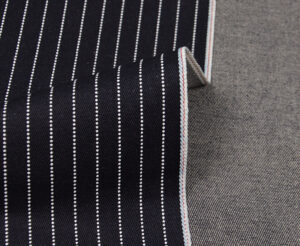
- By the early 20th century, brands like Lee, Levi’s, and Carhartt incorporated Wabash stripes into their work clothing.
- The pattern was often printed or woven into denim or heavyweight cotton, making it durable for laborers.Wabash Striped Selvedge Denim Fabric
- Unlike bold candy stripes or pinstripes, Wabash stripes were typically narrow and subtle, often in indigo, black, or brown.
Revival in Vintage & Americana Fashion
- In the mid-20th century, Wabash stripes faded from mainstream workwear but saw a revival in Japanese Americana and vintage reproduction markets in the 1980s–2000s.
- Brands like Warehouse, Sugar Cane, and The Real McCoy’s recreated Wabash-striped shirts and overalls, celebrating its railroad heritage.
- Today, the pattern is appreciated in heritage menswear as a nod to early industrial American style.
Would you like details on specific brands that used Wabash stripes historically?